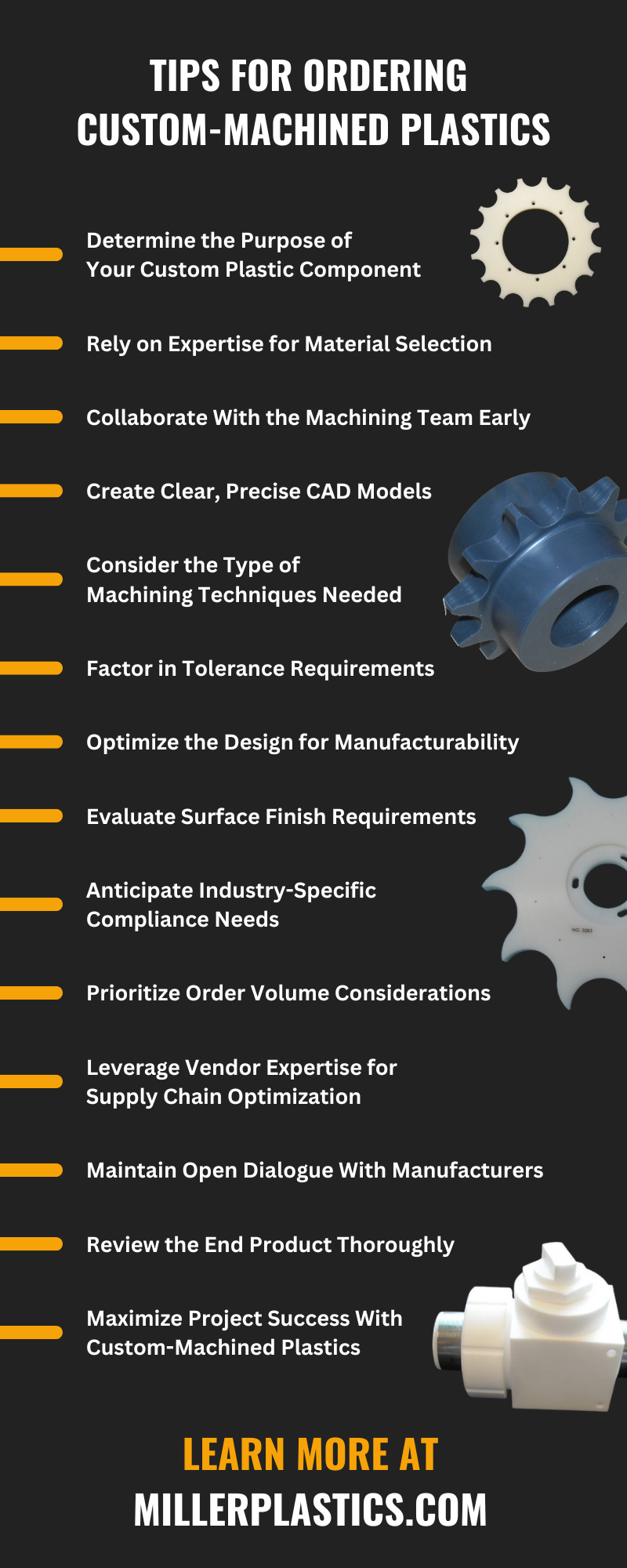

Working with custom-machined plastics is complex, leaving room for miscommunications, delays, and unsatisfactory results if you don’t approach it correctly. You must understand the key elements of the process to efficiently design and order the components you need. These tips for ordering custom-machined plastics, from material selection to design specifications, directly affect the performance, durability, and cost of your final product.
Understanding the Basics of Custom-Machined Plastics
Manufacturers use advanced techniques to custom-machine plastics and create precision parts tailored to unique specifications. These components play a significant role in industries such as aerospace, healthcare, electronics, and automotive due to their high strength-to-weight ratios, chemical resistance, and versatility. Determining the intended operational environment for the part is vital before submitting a machining request. Factors such as exposure to extreme temperatures, moisture, or chemical agents will influence material and design decisions.
Determine the Purpose of Your Custom Plastic Component
Clarifying the purpose of your custom part is an essential first step. Ask yourself what functionality the part should achieve. Will it need resistance to stress, wear, or abrasion? Knowing whether your custom parts are meant to support high loads, operate under high temperatures, or resist corrosion ensures the design meets operational requirements. This aspect focuses ultimately on minimizing manufacturing costs while enhancing the part’s compatibility with its intended operation.
Rely on Expertise for Material Selection
The material you select plays a pivotal role in determining the performance and lifespan of your machined part. Consulting with material specialists or manufacturers helps identify the properties you’re looking for, from lightweight plastics to those with high-impact resistance.
Options range from popular engineering-grade materials such as ABS, polycarbonate, or polyether ether ketone (PEEK) to ultra-durable options such as UHMW or fluoropolymers. Each material option comes with unique mechanical, thermal, and chemical properties tailored to specific industry applications.
Collaborate With the Machining Team Early
A successful outcome often hinges on early collaboration with the machining team. Engineers or machinists can review your design files, providing critical insights into manufacturing feasibility and suggesting refinements to improve outcomes. They ensure tolerances aren’t overly tight when precision isn’t essential, lowering costs without sacrificing functionality. This collaborative approach fosters innovation and opens up new possibilities for optimizing part performance.
Create Clear, Precise CAD Models
Computer-aided design (CAD) models serve as blueprints for the machining team, outlining every specification and dimension of your custom plastic part. Ensuring these models are precise avoids costly miscommunication. Be thorough in detailing wall thickness, joining points, and load distribution patterns in the design. The more accurate the instructions, the higher the likelihood that the manufactured part will meet expectations.
Consider the Type of Machining Techniques Needed
Different machining methods impact cost, precision, and outcomes for custom plastics. Conventional CNC machining is often the go-to process for its unparalleled precision and high repeatability. However, at times, advanced techniques like 4-axis or 5-axis machining may be necessary for creating highly complex geometries. Understanding which machining approach best suits your project can substantially improve turnaround times while reducing the risk of avoidable errors.
For example, a medical device manufacturer who produces intricate surgical tool components might choose 5-axis machining to achieve the tight tolerances and unique shapes required for optimal performance.
Factor in Tolerance Requirements
Setting specific tolerance requirements is crucial to the manufacturing process. Tolerances indicate allowable variations in dimensions due to machining limitations, ensuring parts fit correctly in assembled systems. Overly tight tolerances increase production complexity and cost unnecessarily; selecting reasonable tolerances ensures machined parts perform well without excessive waste. Be sure to involve machinists who can recommend tolerance guidelines suited to your application and budget.
Optimize the Design for Manufacturability
When creating designs, consider whether complex geometries are essential to achieve functional goals. Over-complication leads to manufacturing errors, prolonged lead times, and unnecessary expenses. Simplify intricate layouts, and include features that facilitate ease of machining and assembly wherever possible. Reductions in material waste and cycle times result in cost savings while adhering to high-quality standards.
Evaluate Surface Finish Requirements
Surface finish influences everything from product aesthetics to operational performance. Whether you’re looking for a polished mirror finish, textured surface, or matte effect, knowing your finishing requirements upfront reduces confusion throughout production. Higher-end finishes may involve secondary processes that impact cost and lead times. Discussing these needs with your manufacturer ensures a balance between appearance and cost-efficiency.
Anticipate Industry-Specific Compliance Needs
Industries such as medical device manufacturing or aerospace require adherence to stringent compliance and certification standards. Suppose the custom-machined part is intended for use in regulated environments. In that case, its design and production must meet FDA approvals, ISO certifications, REACH regulations, or other necessary guidelines. Failing to account for these strict standards could lead to higher costs and project delays, so incorporating compliance planning early simplifies production.
Prioritize Order Volume Considerations
The scale of your order significantly impacts pricing and machining efficiency. Batch machining lowers the cost per unit, making it the most cost-effective option for larger orders. However, if you’re prototyping or working on low-volume production runs, maintaining consistent supplier communication helps manage pricing expectations. Understanding minimum order quantities (MOQs) beforehand aligns your needs with supplier capabilities.
Leverage Vendor Expertise for Supply Chain Optimization
Opting for vendors with robust logistics and supply chain solutions bolsters order consistency and minimizes lead times. Top-tier suppliers may offer value-added services such as inventory management, demand forecasting, or quick-turn machining for last-minute needs. A reliable supply chain can make a significant difference in ensuring on-time delivery and seamless integration of custom-machined partsinto larger production cycles.
Maintain Open Dialogue With Manufacturers
Don’t assume that your manufacturer understands every nuance of your project needs. Regular communication builds rapport, clears up ambiguities, and strengthens collaboration across departments. Providing constructive feedback or notifying machinists of upcoming challenges often translates to better designs and shorter production cycles. Having a strong working relationship with suppliers paves the way for long-term success.
Review the End Product Thoroughly
Once the process is completed, reviewing the manufactured part for accuracy establishes confidence in its overall quality. Take time to evaluate tolerances, finishes, and material consistency specific to the part’s function. This inspection identifies issues early on and provides opportunities to rectify any discrepancies. Reliable suppliers typically offer post-production support to ensure client satisfaction.
Maximize Project Success With Custom-Machined Plastics
Handling the complexities of custom-machined plastics becomes manageable when guided by these principles. Whether addressing material selection, production tolerances, or order volume, each step contributes uniquely to achieving precision. By paying meticulous attention to every detail and collaborating with machining professionals, companies ensure projects are executed efficiently without compromises.
If you’re ready to experience exceptional results and professional support throughout your next custom machining project, reach out to a supplier who specializes in custom-machined parts. Making informed decisions by using these tips for ordering custom-machined plastics guarantees superior quality, getting your organization one step closer to operational excellence.